
Professional soldier, Old Contemptible and pioneer of mechanised transport
Leonard Campbell Johnstone was born on 30 November 1884 at Port Hill, Bengeo, Hertfordshire, the youngest son of James Johnstone and Eliza Johnstone nee Hornett. Leonard became a professional soldier whose career spanned one of the great transformations in modern warfare. Already an experienced serviceman when the First World War began in 1914, he was among the original British Expeditionary Force sent to France — the men who would become known as the Old Contemptibles.
His wartime experiences included an extraordinary episode in which Leonard captured 25 German soldiers, a story that deserves a prominent place in his history. Surviving photographs show the career soldier behind the story: Leonard as a senior NCO, in wartime service dress and, wonderfully, astride his Douglas motorcycle beside Corporal Holyce.
Yet the war was only part of Leonard’s remarkable life. His association with motorised transport continued beyond the battlefields of Europe and eventually took him to British Somaliland, where family records credit him with becoming the first man to drive a mechanised vehicle across the territory.
Born in 1884, when military transport still depended overwhelmingly upon horses, Leonard lived through — and participated in — the revolution that replaced horsepower with the internal-combustion engine. Soldiering, motorcycles and pioneering motor transport all became parts of his story.
He was also the son of James Johnstone, veteran of the Crimea and Indian Mutiny, making Leonard the second generation of what was becoming an extraordinary military family.
Before the Army
In 1901, sixteen-year-old Leonard was living with his widowed mother Eliza and his family in Staines. The census records his occupation as an “Ironmonger’s Core Maker”, an early indication of the practical and mechanical world that would feature prominently throughout his life.
Within a few years he had exchanged industrial work for the Army. It was the beginning of a military career that would take him from pre-war soldiering through the opening campaign of 1914 and the First World War, and eventually into the emerging world of military motor transport.
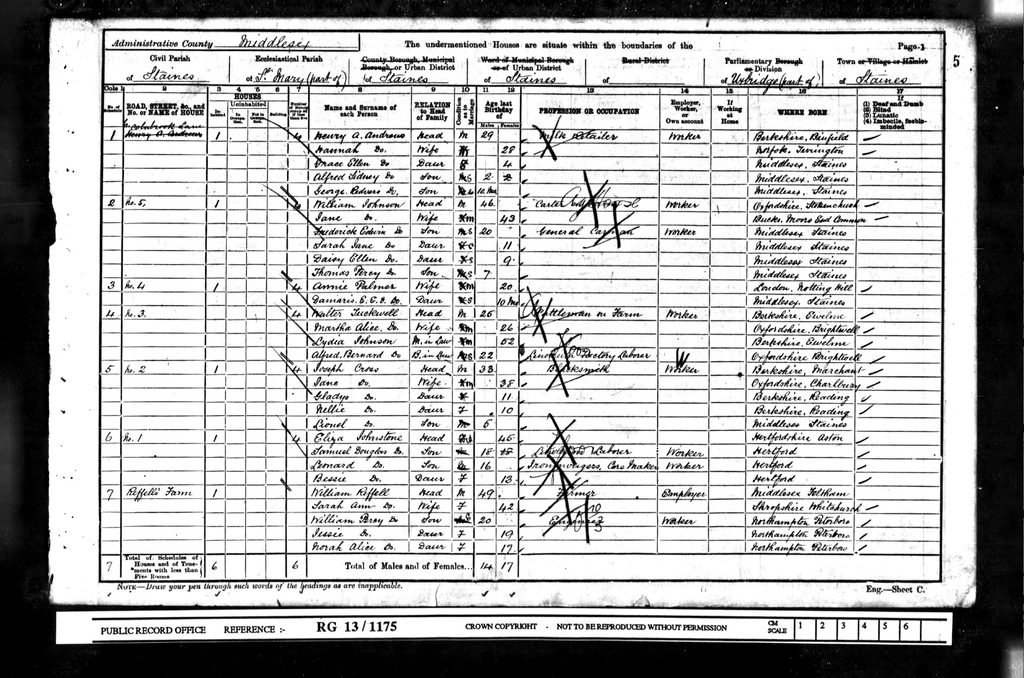
By 1901, sixteen-year-old Leonard was living with his widowed mother Eliza in Staines. The census records his occupation as an “Ironmonger’s Core Maker”, placing him in skilled industrial work before the beginning of his military career.
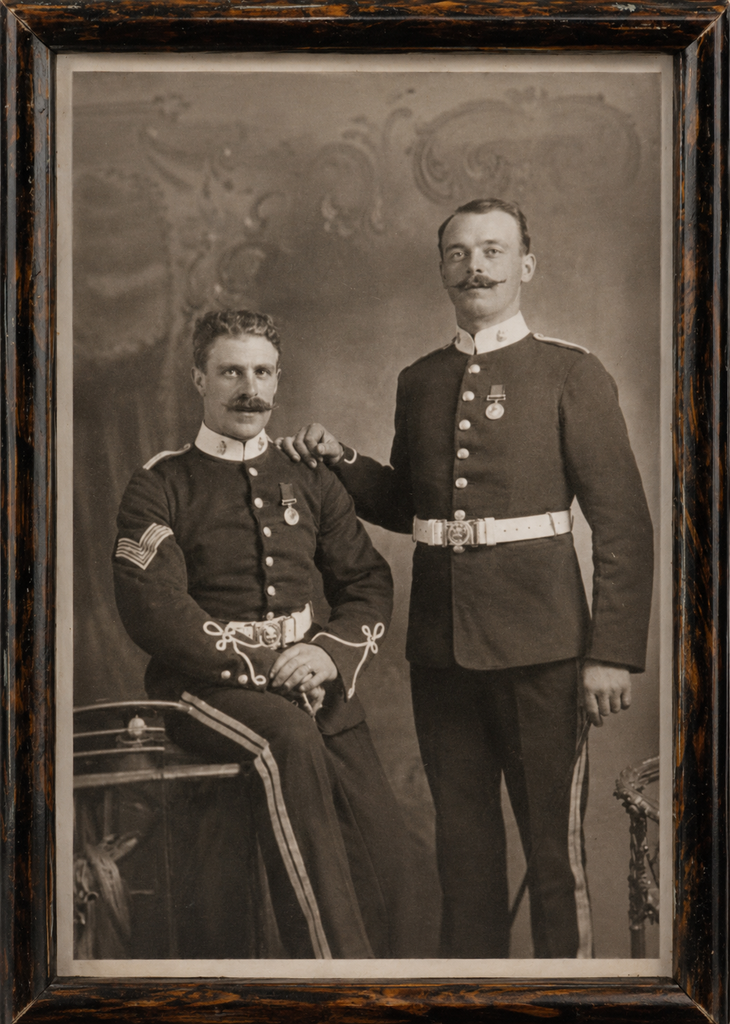
Sergeant Leonard Campbell Johnstone (seated) with a fellow soldier, in a formal studio portrait believed to predate the First World War. Leonard’s sergeant’s chevrons are clearly visible, together with a single, as yet unidentified, medal from his earlier military service.
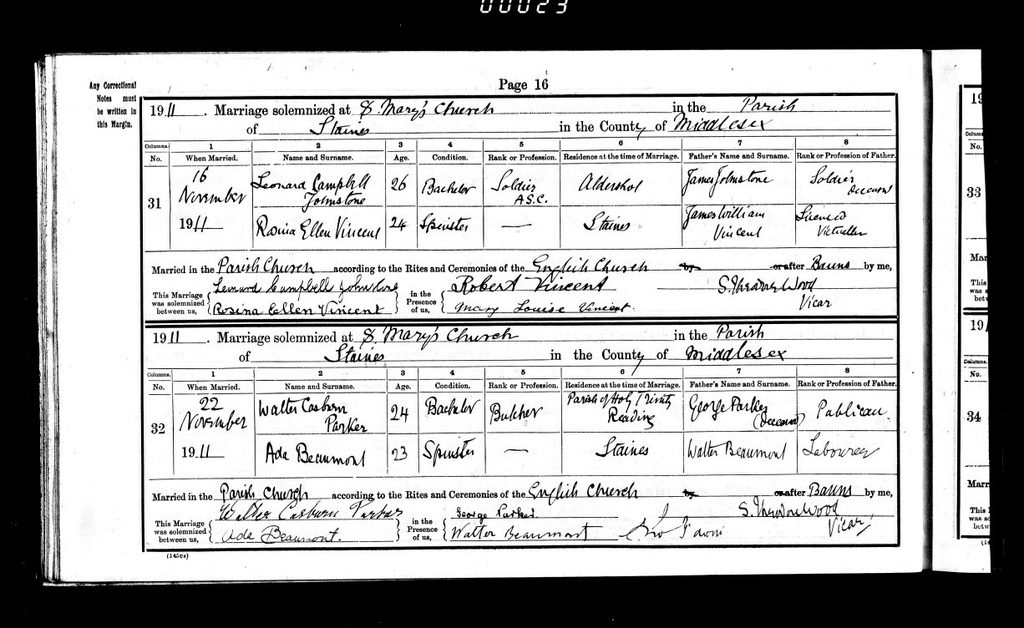
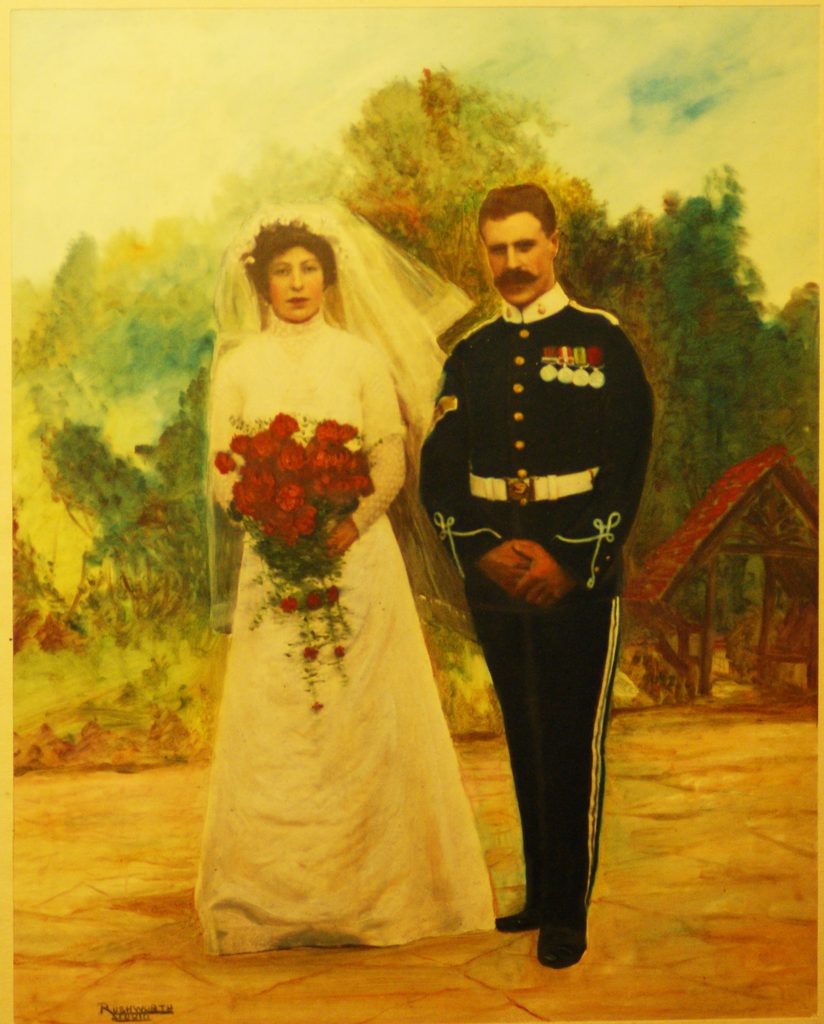
On 16 November 1911, Leonard married Rosina Ellen Vincent at St Mary’s Church, Staines. The marriage register records him as a 26-year-old soldier serving with the Army Service Corps and based at Aldershot. His father, James Johnstone, who had died in 1899 after his own long Army career, is appropriately recorded simply as “Soldier — deceased”.
The surviving wedding portrait shows Leonard in full dress uniform, already a sergeant and wearing the medals earned during his pre-war service. Rosina was the daughter of Staines licensed victualler James William Vincent.
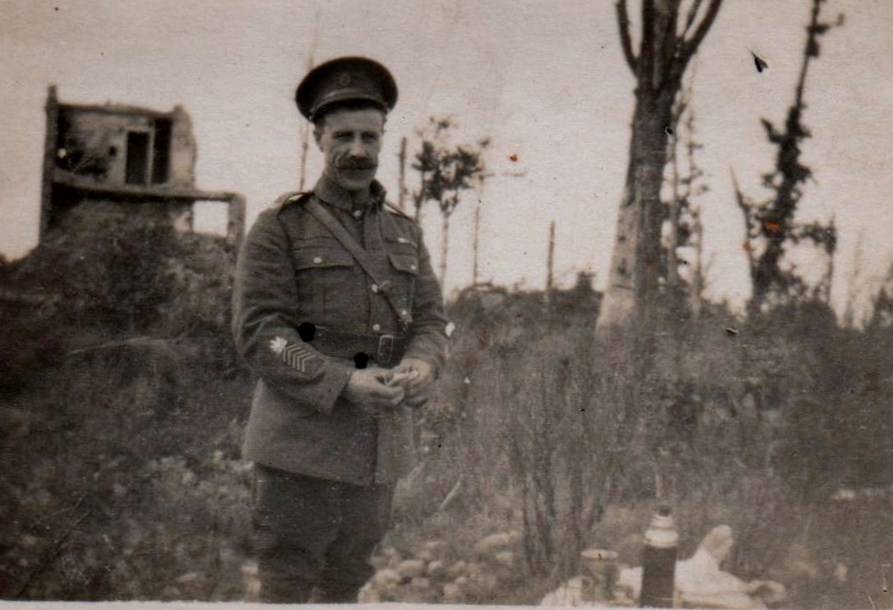
Leonard Campbell Johnstone at Ypres, Belgium, during the First World War.
Leonard was already a professional soldier when war was declared in August 1914 and served with the original British Expeditionary Force — the men who later became known as the Old Contemptibles. This remarkable surviving photograph places him on the battlefield at Ypres, amid the devastation of the Western Front.
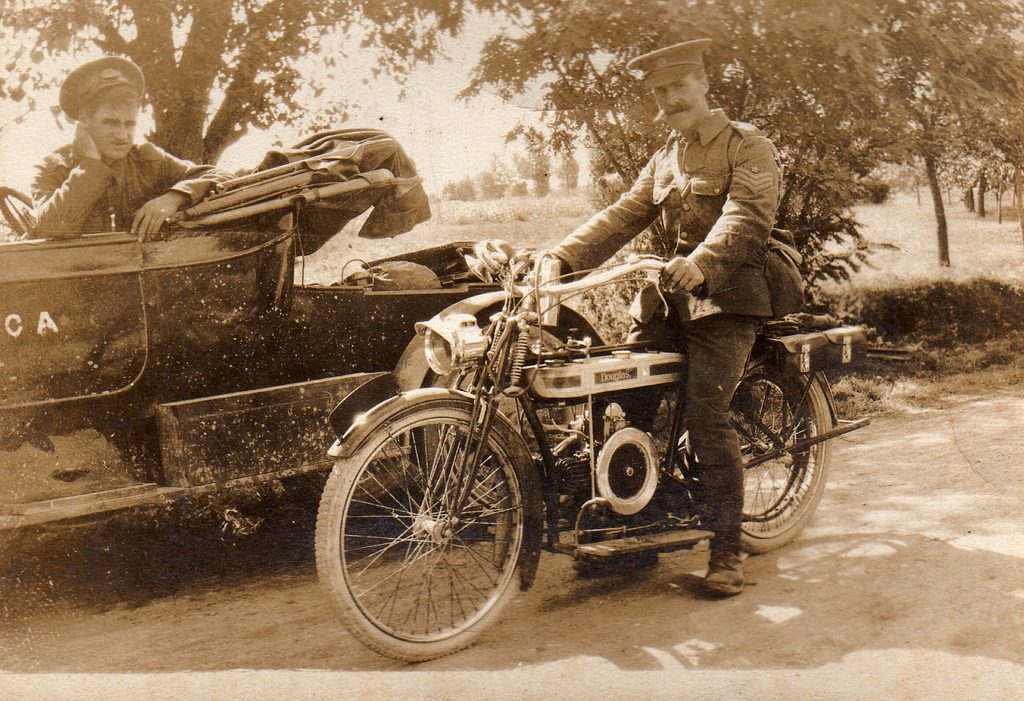
Company Sergeant Major Leonard Campbell Johnstone with his Douglas motorcycle, accompanied by Corporal Holyce.
Leonard’s association with motorised transport would later take on particular significance during his service in British Somaliland.
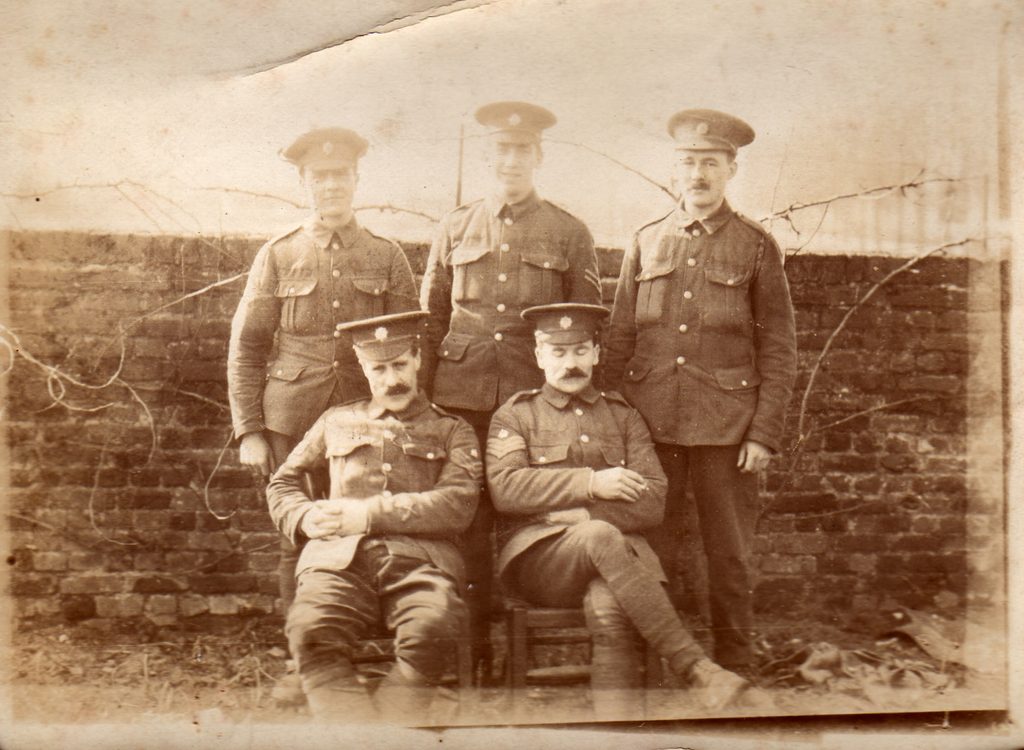
Leonard Campbell Johnstone with four fellow soldiers during the First World War.
Leonard is seated on the left. It is possible that this group comprised fellow Old Contemptibles — veterans of the original British Expeditionary Force of 1914 — although the identities of the other men and the date and location of the photograph have yet to be established.
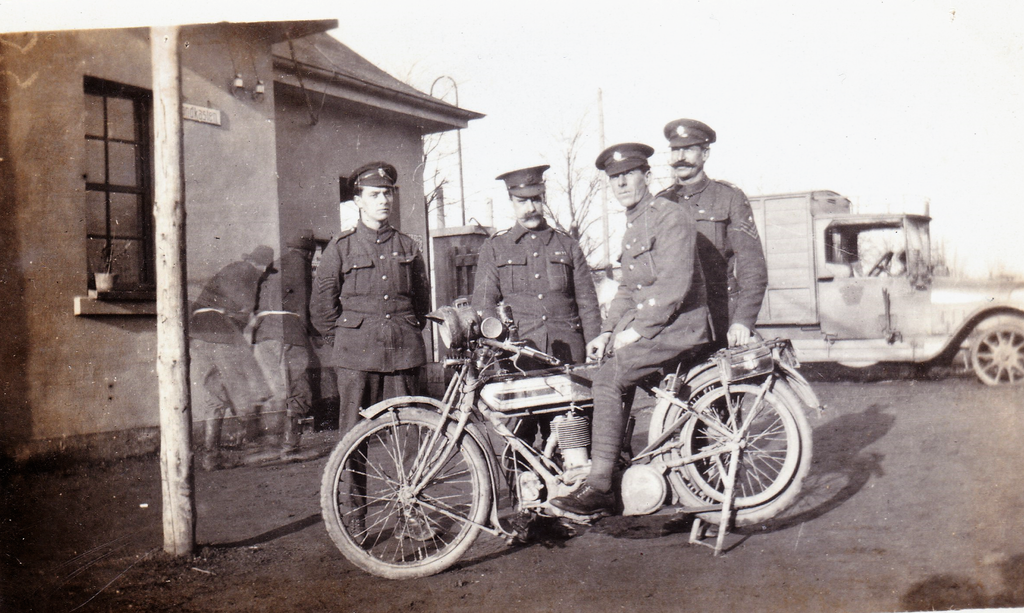
Leonard Campbell Johnstone with fellow soldiers and an early military motorcycle.
Leonard is second from the left. The photograph also shows an early motor lorry in the background and appears to have been taken at a military establishment. The date and location are presently unknown. The motorcycle appears very similar to the Douglas seen with Leonard in another surviving photograph.
This photograph is particularly interesting in view of Leonard’s later involvement with pioneering military motor transport in British Somaliland.
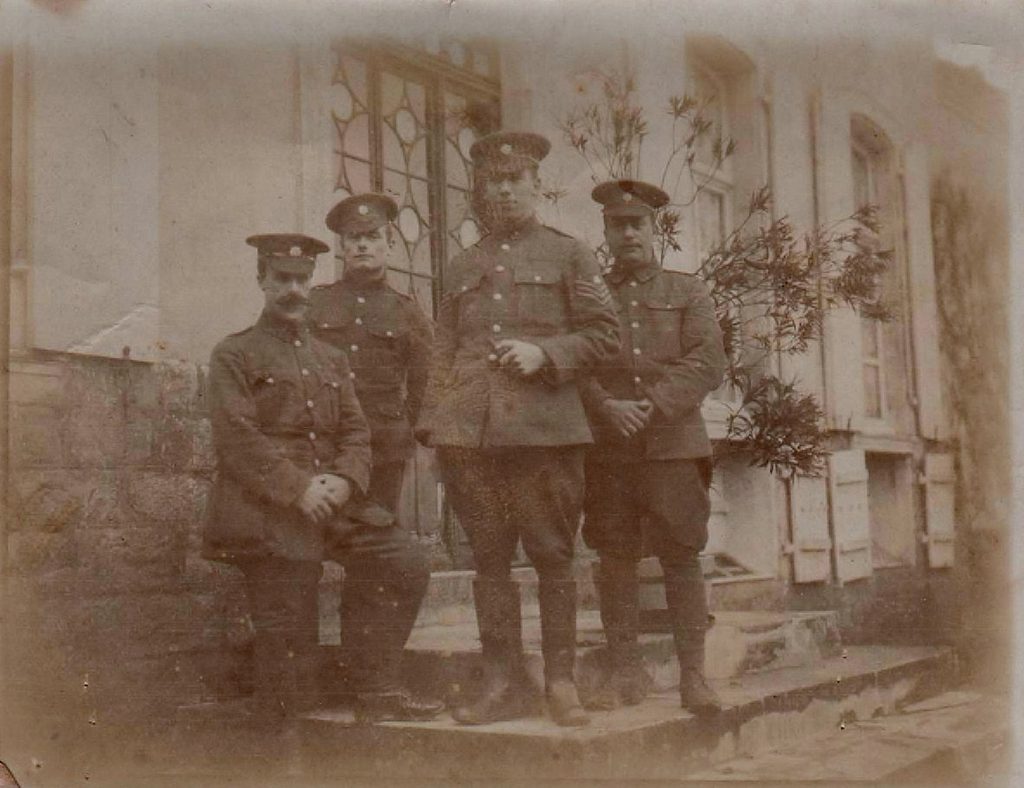
Leonard Campbell Johnstone (far left) with three fellow soldiers.
The date and location of this informal group photograph are unknown. It may have been taken during one of Leonard’s overseas postings, but no firm identification has yet been established.
Leonard Campbell Johnstone and the Somaliland Expedition
One of the stories handed down through the Johnstone family was that Leonard Campbell Johnstone had been the first man to drive a mechanised vehicle across British Somaliland. For many years it remained one of those extraordinary pieces of family history for which little documentary evidence appeared to survive. Recent research, however, has begun to reveal just how closely the story fits Leonard’s military career.
Leonard was no ordinary Army driver. Military records identify him as:
No. M/22794 Mechanist Serjeant-Major L. C. Johnstone
Within the Army Service Corps, the Mechanist Sergeant-Major was a senior technical specialist in the increasingly important field of military mechanical transport. Leonard’s experience therefore extended far beyond simply driving vehicles. Men of his rank were responsible for the operation and maintenance of mechanical transport under conditions in which roads, workshops and readily available spare parts might simply not exist.
Leonard’s service had also received official recognition. He was Mentioned in Despatches, appearing in the surviving index under his service number, rank and initials: Johnstone, No. M/22794 Mechanist Serjeant-Major L. C. The distinction adds an important dimension to his story: by the end of the First World War he was not merely an experienced mechanical-transport specialist, but a senior soldier whose service had been considered worthy of formal recognition.
This becomes particularly significant in the immediate aftermath of the war. In 1919–20 British forces were preparing the final campaign against the Dervish forces in Somaliland. The operation was notable for its use of aircraft, but the RAF could not operate in isolation. Fuel, ammunition, water and supplies had to be transported across exceptionally difficult country, and mechanical transport became an essential part of the expedition.
Alongside the RAF’s Z Force, specialist Army mechanical-transport personnel operated Ford and Crossley light trucks, carrying the supplies upon which the operation depended across the Somaliland interior. It was demanding work in country for which conventional motor transport was scarcely designed.
Leonard’s presence in this story therefore makes considerable sense. He was a highly experienced Mechanist Sergeant-Major, already distinguished by a Mention in Despatches, at precisely the time when the Army required men with exceptional mechanical knowledge for an unusual and difficult mechanised expedition. A man with his rank and experience would not have been randomly employed: his particular skills were those required to organise, maintain and operate mechanical transport in precisely the conditions encountered in Somaliland.
And that brings the documentary evidence back to the story preserved within the Johnstone family for more than a century: that Leonard was the “first man to drive a mechanised vehicle across British Somalia.” What might once have sounded like an improbable piece of family folklore now sits remarkably comfortably alongside what we know of Leonard’s rank, technical expertise, distinguished service and the pioneering use of motor transport during the Somaliland campaign.