
The earliest surviving photographs of the Johnstone family date from the mid to late nineteenth century. Together they provide a rare glimpse into the family from which Alfred Sinclair Johnstone was born in 1900. These portraits form the opening chapter of the Johnstone Archive.
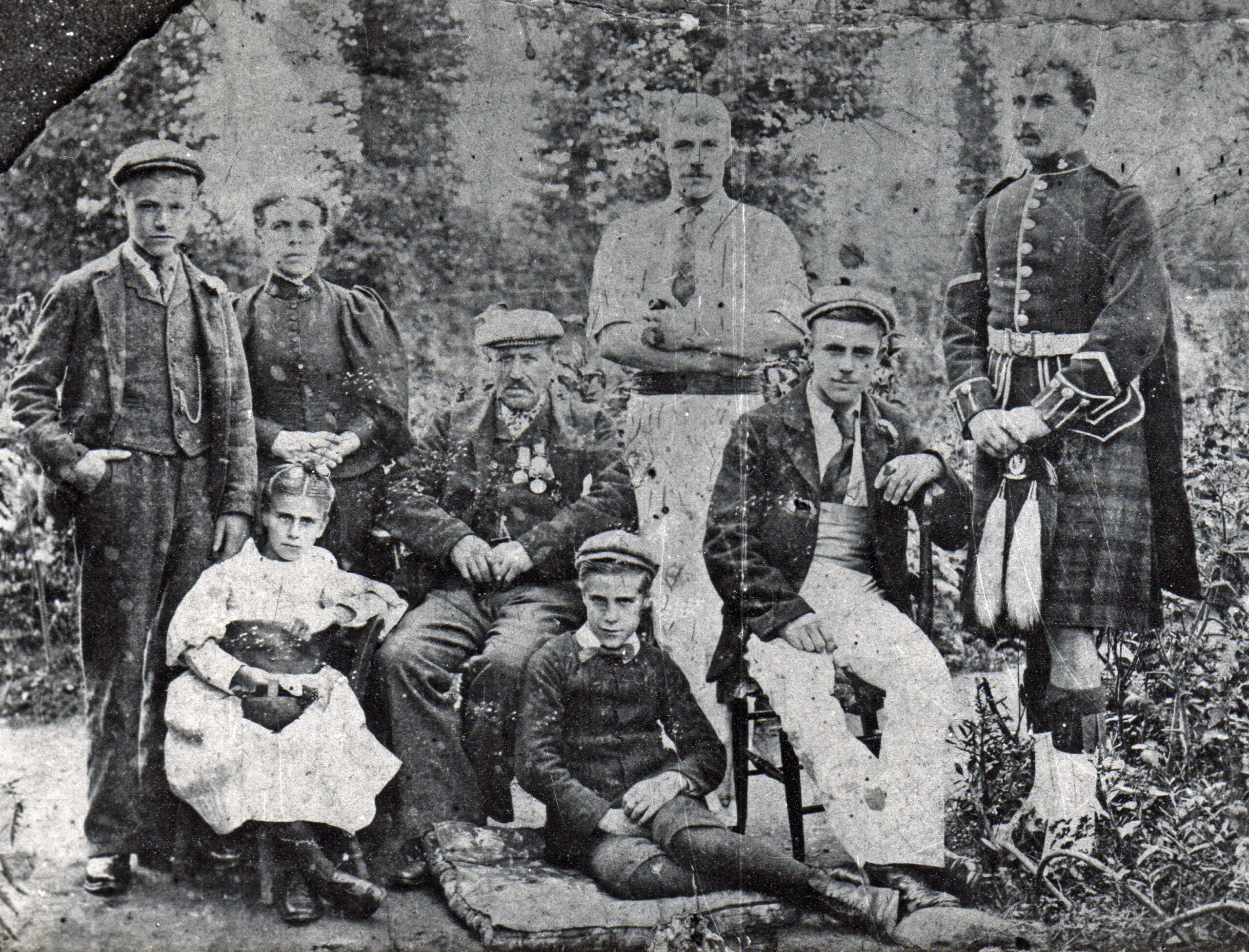
The Johnstone family, c.1894.
Standing (left to right): Douglas Johnstone, Eliza Johnstone (née Hornett), Millice Johnstone and James Richard Johnstone Jr. Seated: Bessie Johnstone, James Richard Johnstone (1832–1908) and Alfred Sinclair Johnstone. Seated on the floor: Leonard Johnstone. This remarkable family portrait was taken approximately six years before the birth of Alfred Sinclair Johnstone (1900–1987), the central figure of Boy Bugler.
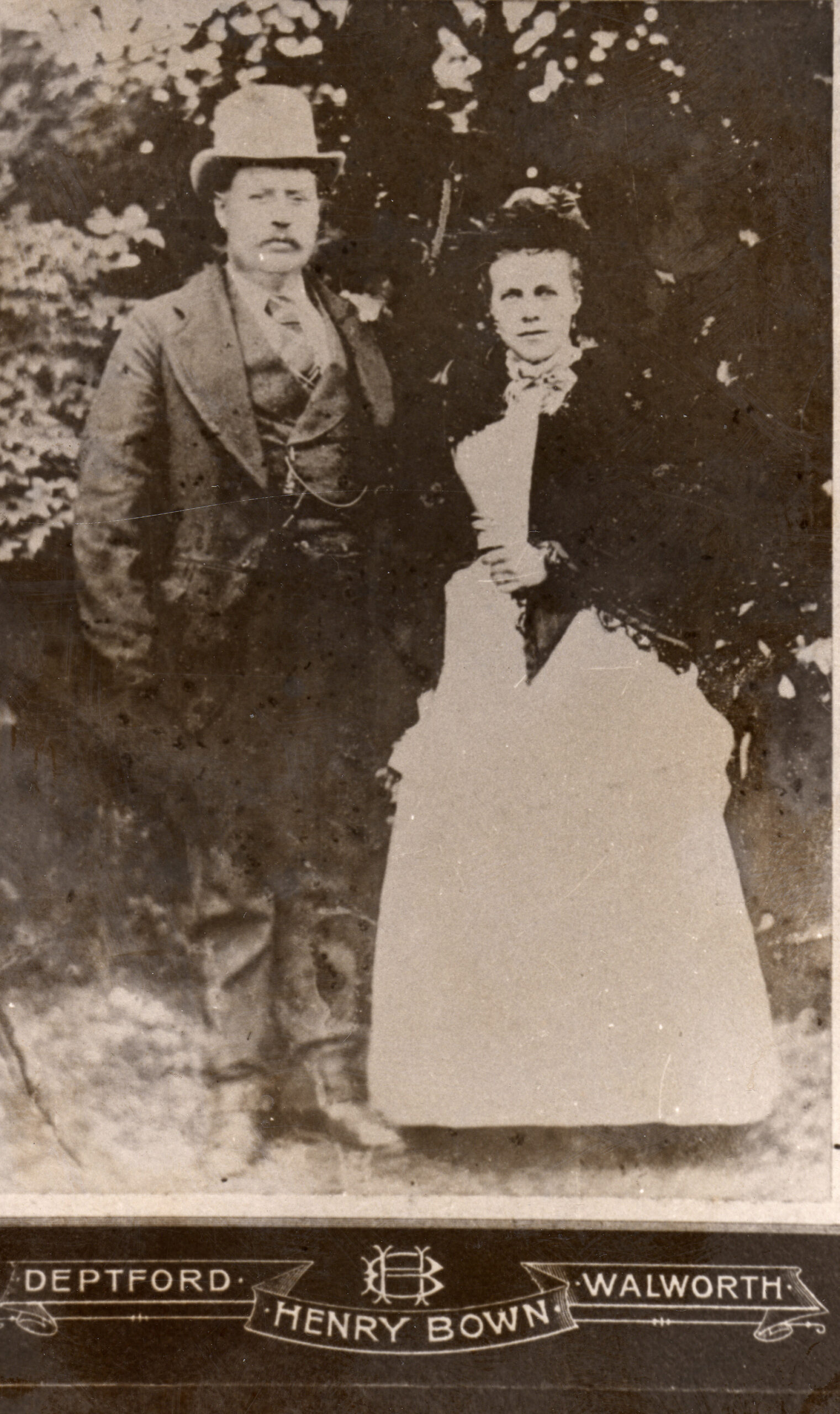
James Johnstone (1832–1908) and Eliza Hornett (1852–1930) on their wedding day, 21 October 1874. Studio portrait by Henry Bown of Deptford and Walworth. One of the earliest surviving photographs in the Johnstone Archive.
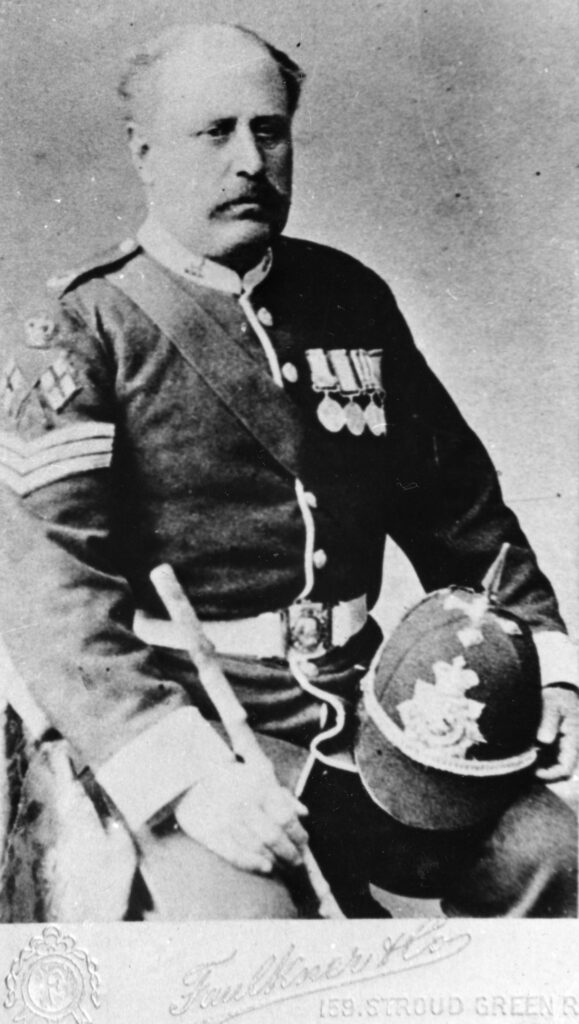
James Johnstone (1832–1908),
Born at Ecclefechan, Dumfriesshire, Scotland. During a long military career he served in both the Crimean War and the Indian Mutiny, including the campaigns at the Siege of Delhi and the Relief of Lucknow. Wearing his campaign medals, this portrait records a veteran whose service spanned two of the major conflicts of the Victorian era. The portrait was carefully restored by his grandson, Alfred Sinclair Johnstone, helping to preserve one of the earliest visual records of the Johnstone family.
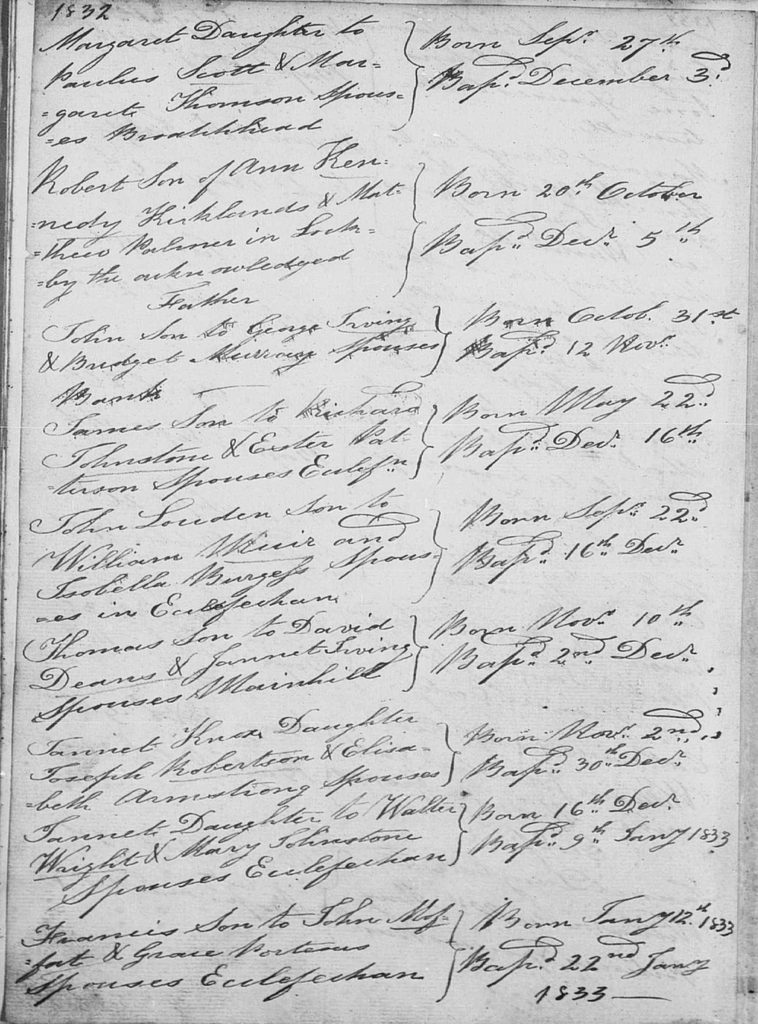
James Johnstone (1832–1899) was born at Hoddom, near Ecclefechan, Dumfriesshire, on 16 December 1832, the son of Richard Johnstone and Esther (Easter) Paterson. He later named one of his own sons James Richard Johnstone, continuing the family naming tradition.
Military History
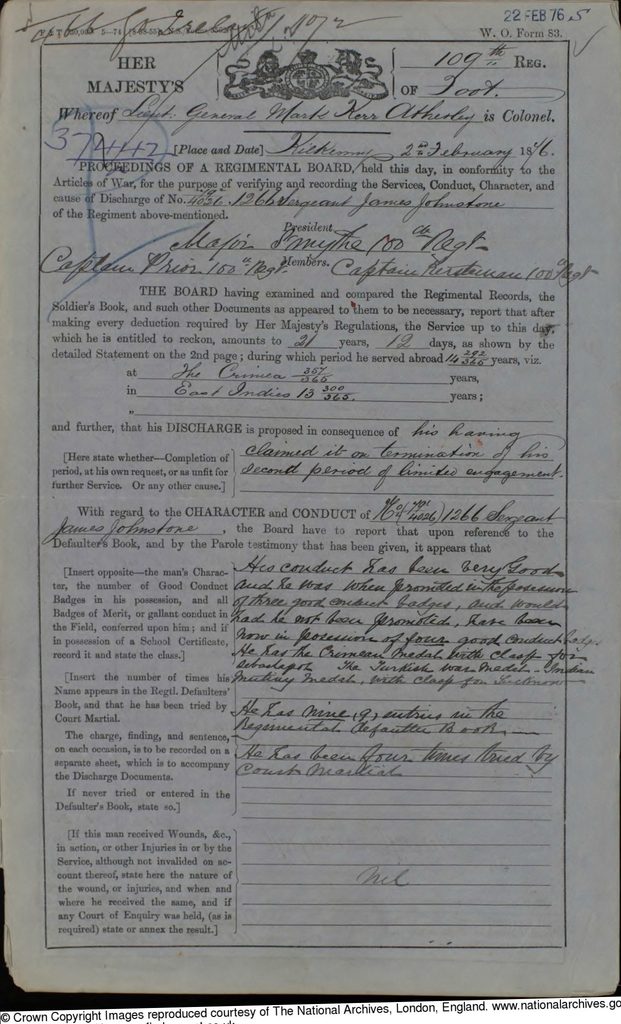
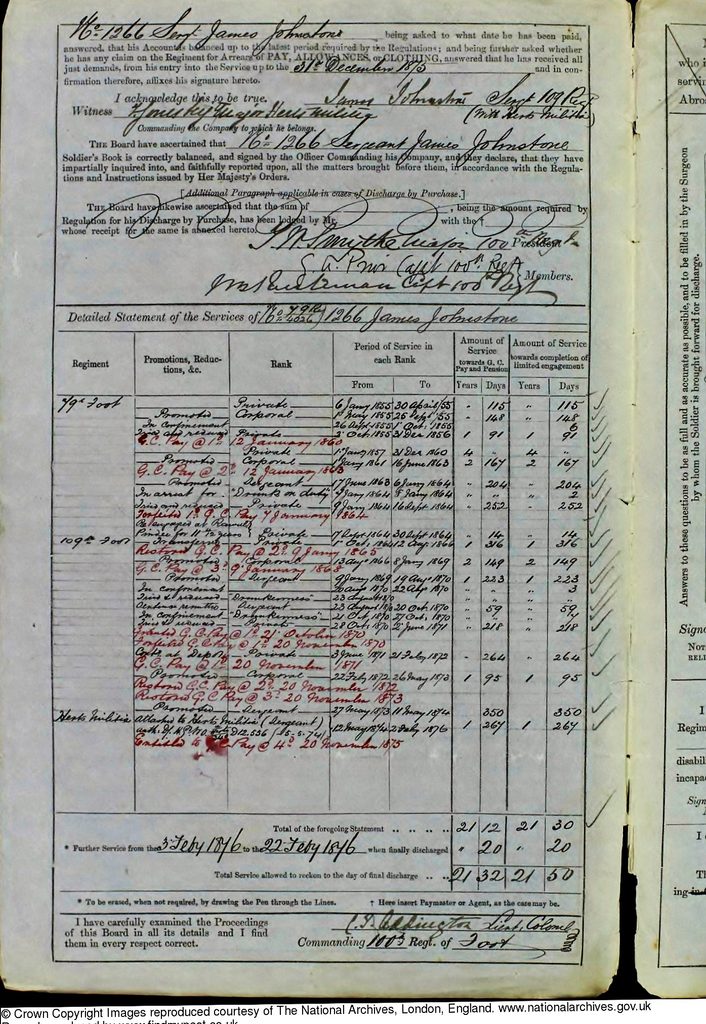
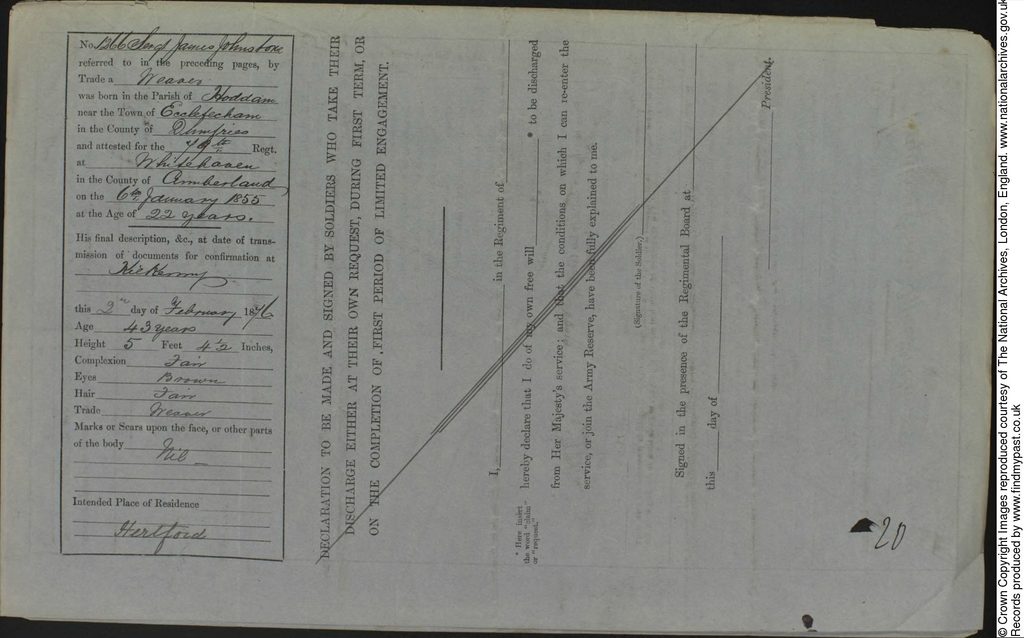
Following more than twenty-one years’ service, James Richard Johnstone was honourably discharged from the 109th Regiment of Foot in February 1876. His discharge papers record service in the Crimea and India, list the medals he earned—including the Crimean Medal with Sebastopol clasp and the Indian Mutiny Medal with Lucknow clasp—and describe his conduct as “very good”. They also preserve personal details including his occupation as a weaver, his physical description and his intended return to Hertford. Together, they provide an unusually complete picture of the soldier whose descendants would eventually include Alfred Sinclair Johnstone, the subject of Boy Bugler.