
Full Steam Ahead
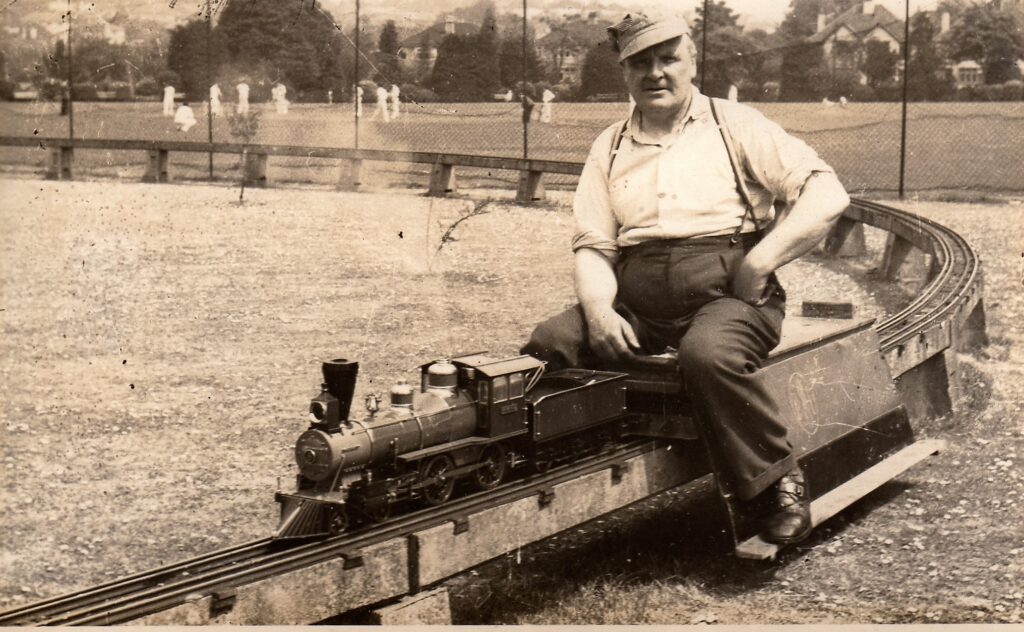
Engineering was never simply a profession for Jack Davies. Throughout his life he remained fascinated by machinery, and nowhere was this more apparent than in the remarkable working steam locomotives he built. This gallery brings together surviving photographs of those engines — miniature locomotives constructed with the same practical ingenuity and engineering skill that characterised so much of his life.
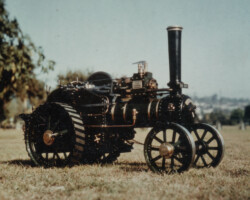
1 1/2" gauge Aveling and Porter traction engine - working pressure 60lbs.sq.in.
The General Purpose Traction Engine depicted by this model was used mainly for threshing and light road haulage from the 1890's to 1920's. Other than the cylinder, this model is completely fabricated and was the first attempt at Model Engineering in this scale.
The name 'Bunty' is the pet name of my young daughter who took great interest in its building and the number plate contains her initials and birthday date.
Made by J. Davies. NB: John Davies started this project in 1926 whilst in the employ of Lord Gladstone. It took him some 20yrs to finish the build, and It was one of my favourite things to play with when I was a child.
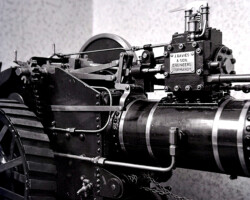
Close-up of Bunty’s valve and running gear.
Close-up of Bunty’s valve gear and running gear. 1 1/2" scale - No. CD 5141 built by Jack Davies
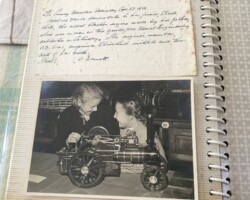
The Sunday Advertiser Wednesday Sept. 27. 1950 | Christine Davies demonstrates to her friend, Sheila White, the model traction engine made by her father, which was on view at the Guildford Model Engineering Exhibition on Saturday. The engine's number, C.D. 5141, comprises Christine's initials and the date of her birth - Photo (W. Bennett)
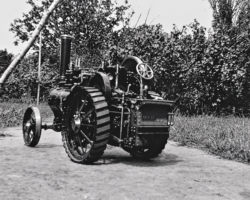
Bunty circa 1949
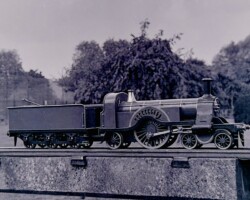
Stirling Single 2 1/2" Gauge - Canford Park, Bristol - June 1956
Stirling Single 2 1/2" Gauge - built by Jack Davies photograph taken at Canford Park, Bristol - June 1956
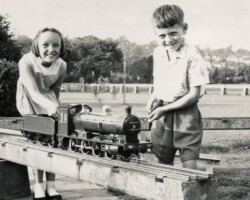
Leo @ Thames Ditton Miniature Railway, Willowbank, Claygate Lane, Surrey
Two delighted children pose with the little steam engine called Leo - so named after Jack's brother who perished alongside Lord Kitchener aboard the ill-fated H.M.S Hampshire 1916
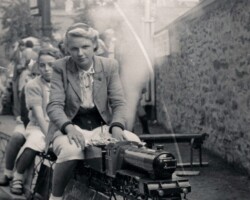
Bantam Cock | Christine up | 1956
My aunty Christine in 1956 driving Bantam Cock with children passengers
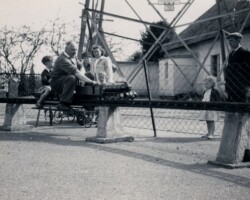
The Bantam Cock | Newton Abbot 1955
Another day out in Newton Abbot to enjoy his 3 1/2" gauge Bantam Cock steam locomotive
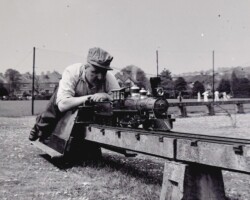
Virginia at Canford Park 1959
On the track at Canford Park with Jack's 3 1/2" gauge locomotive "Virginia" - 1959
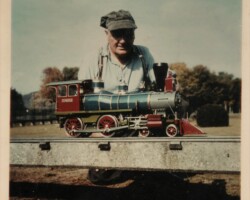
Jack Davies with his steam loco Virginia - a 3 1/2" gauge working model complete with cow-catcher.
Jack Davies with his Virginia @ Thames Ditton Miniature Railway, Willowbank, Claygate Lane, Surrey
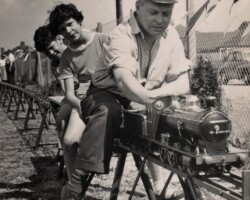
Leo @ Grange School in New Haw Sept 1962
Leo pulling an unknown driver and two passengers on a temporary track at Grange School, New Haw - September 1962
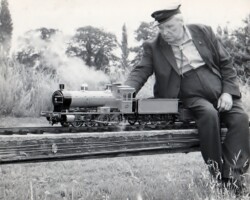
JD driving Leo c1975
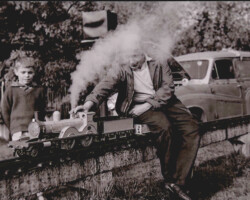
Adams T3 - Thames Ditton - 1963
Adams T3 on the track at Thames Ditton. November 1963. George Williams at the controls.
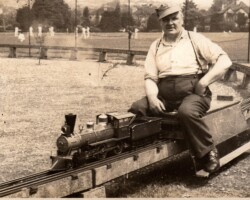
Virginia | Thames Ditton Miniature Railway, Willowbank, Claygate Lane, Surrey
Jack Davies being pulled by his hand-built American locomotive Virginia - c1960
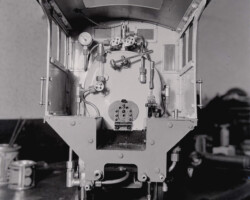
Virginia cab - boiler backhead or backplate
Cab view of Virginia
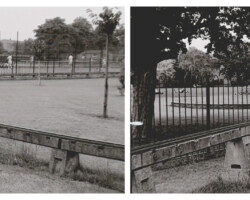
Virginia Canford Park June 1960
A family holiday in Bristol, June 1960. On the track at Canford Park, with Jack's sister Lennie and his wife Vi driving the 3 1/2" gauge loco "Virginia"
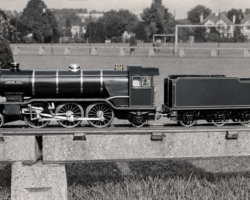
L.N.E.R. 2-6-2 Mixed Traffic Locomotive "Bantam Cock"
L.N.E.R. 2-6-2 Mixed Traffic Locomotive "Bantam Cock" 3/4" scale, 3 1/2" Gauge - built by J. Davies - photograph taken @ Thames Ditton
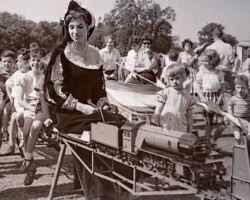
Walton & Weybridge Fete - 1st June 1963
Walton & Weybridge Fete - 1st June 1963. One of Henry 8th’s wives at the controls of Verne Crane built by Jack Davies on a portable track.
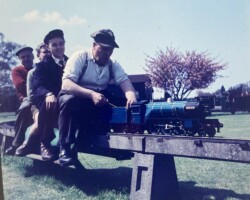
Steam locomotive named after his American friend Verne Crane - built by Jack Davies and driven by him. c1955
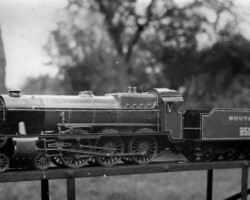
Lord Nelson — Southern Railway No. 850
A working model of Southern Railway No. 850 Lord Nelson, built by Jack Davies. This photograph is dated 25 November 1974.
Jack reproduced the locomotive in its original Southern Railway identity, complete with SOUTHERN 850 on the tender. The full-sized Lord Nelson, designed by Richard Maunsell and built at Eastleigh in 1926, was the prototype of the celebrated 4-6-0 class that bore its name.
The date Jack completed the model is presently uncertain, as is its subsequent history. A number of his models and engineering pieces were later sold, including items through Christie's, but the eventual fate of Lord Nelson has not yet been established.
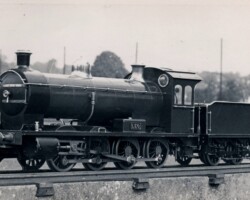
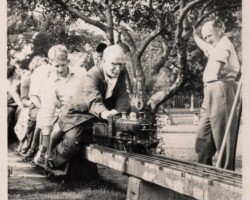
LEO built by Jack Davies, driven by Alfie Fink @ Cranford Park Bristol
LEO built by Jack Davies, driven by Alfie Fink @ Cranford Park Bristol
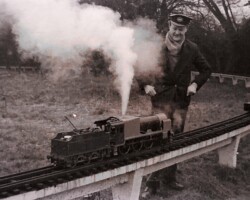
Royal Scot Thames Ditton - Feb 1969
Thames Ditton - Feb 1969 - first steam of Royal Scot with grandfather’s mate Dave Russell looking on. I remember Dave very well, he lived just around the corner and was always up for a chat about model engineering.
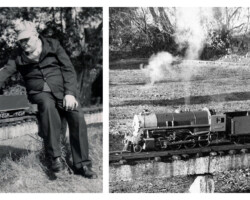
Minnehaha — c.1965
Minnehaha, a 3½-inch gauge Consolidation built by Jack Davies around 1965 and fitted with Baker valve gear. The locomotive was Jack's version of “Curly's Minnehaha” and was later described in the Model Engineer Centennial Celebration Collection as “very successful, as were all his locos.”
Jack is pictured with Minnehaha under steam; in the second photograph his young grandson Kevin, aged about six or seven, sits on the driving trolley behind the locomotive.
A later published recollection remembered Jack as “a lovely man” who was “always cheerful”, adding that he and his friend George Williams were “gone but not forgotten.
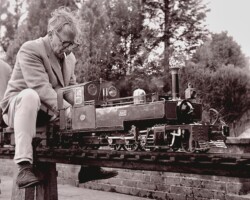
Axe 1967
On the track at Chipperfield. Mr. Ward driving Axe
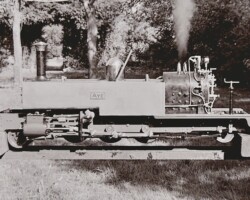
3 1/2" gauge Manning Wardle
First steam test of Jack's 3 1/2" gauge Manning Wardle model of the locomotive used on the Lynton to Barnstaple line - 1971
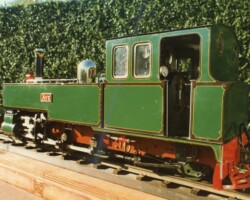
Manning Wardle
This is a modern photograph of JD's Lynton Barnstaple model steam engine - built in the 1950s - it was displayed at the North Devon Museum.
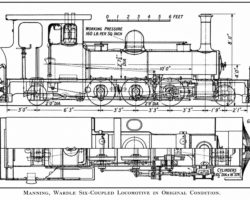
Manning Wardle — Design Reference
Engineering drawing photographed by Jack Davies from L. T. Catchpole's The Lynton & Barnstaple Railway. Preserved among Jack's own negatives, it was evidently retained as reference material for the Manning Wardle locomotive he subsequently built.
The drawing also illustrates something of the skill involved in Jack's work. He was not simply assembling a model from a commercially supplied kit or following a ready-made set of model-engineering plans. Starting with information about the full-sized locomotive, he had to translate the original design into a much smaller working steam engine.
That involved considerably more than reducing every measurement by the same proportion. The dimensions and appearance of the prototype had to be preserved while the boiler, cylinders, valve gear, bearings, steam passages and other working components had to function successfully at miniature scale.
Among Jack's surviving negatives are a number of photographs of drawings, diagrams and magazine articles. They suggest that his photographic collection also served another purpose: it was, in part, his own engineering reference library.
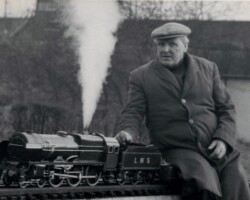
The Royal Scot - December 1969
Jack Davies driving his 'Royal Scot' @Thames Ditton. Dec 1969. Locomotive sold at Christies. 4th March. 1970.
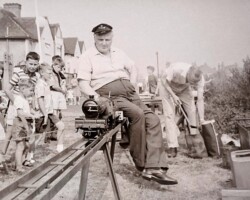
Bantam Cock - Walton Sea Scouts Fete - 1964
Delighting some children at the Walton Sea Scouts Fete - 21st Sept. 1964
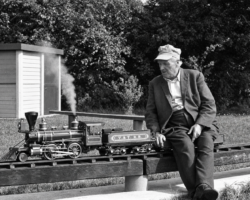
J. W. Bowker — First Steam Test, August 1973
Jack Davies enjoying the fruits of eight years work that went into this engineering masterpiece, the J.W. Bowker
J.W Bowker built by Jack Davies
Award winning American fire-fighting locomotive
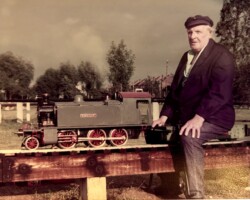
Einziger — Jack's Last Locomotive
Jack Davies with Einziger, the last locomotive he built. By then in his eighties, Jack was still designing, machining and constructing working steam locomotives.
The name is intriguing. The German einzig means “only”, “sole” or “unique”, while Einziger can convey “the only one”. Jack left no known explanation for his choice of name, but for the final locomotive of a lifetime spent building steam engines, it seems an unusually appropriate one.
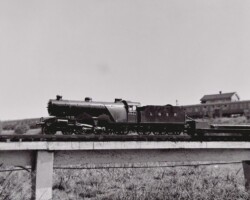
Maisie L.N.E.R
3 1/2" Maisie L.N.E.R. as sold to Bill Camp, February. 1967
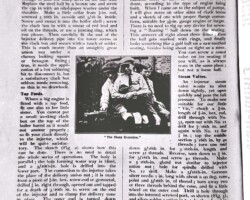
Model Engineer and Electrician 1924
Photographic extracts preserved by Jack Davies from the 27 November 1924 edition of *The Model Engineer and Electrician*, concerning the construction of a 3½-inch gauge steam locomotive. Among the photographs is a charming image of children in flat caps riding behind the completed engine.
Jack was still serving in Egypt at this time and would not return to England until the following year. Intriguingly, he chose to preserve these particular extracts in his photographic collection, under the title **“VINDICTIVE.”** Why he chose that title is unknown.
The photographs provide a fascinating glimpse of Jack's interest in model engineering before his return home. Within a year or two he would begin model engineering projects of his own, beginning an enthusiasm that would remain with him for the rest of his life.
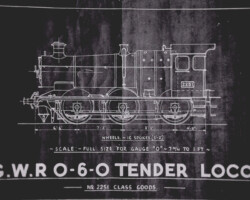
Great Western Railway 0-6-0 Tender Locomotive
G.W.R 0-6-0 Tender Locomotive - No.2251 Class, Goods. 7mm Scale Drawing.
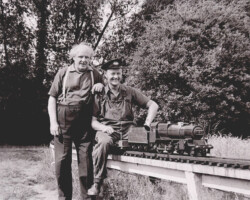
Princess Marina - Dave Russell - 1968
Model locomotive Princess Marina 3 1/2in gauge - Jack Davies with the new owner, Dave Russell - 1968
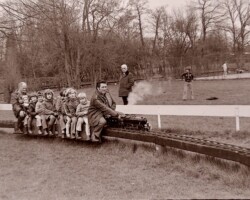
L.M.S. Black Five
L.M.S. Black Five 3 1/2" gauge pulling a group of children and two adults - this engine was one of Jack's rebuilds. Easter Monday 1975
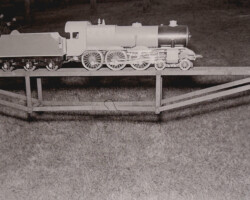
Baltic Tank Rebuild 1975
2 1/2" gauge 4-6-0. - near completion after a rebuild from a Baltic Tank. 1st April. 1975.
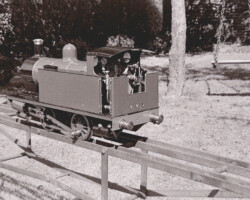
Juliet
Juliet (mark 1) is seen here in the back garden of 11 Ayebridges Avenue, Egham, Surrey. The engine was sold at Christies Auctions on 17 Nov 1971
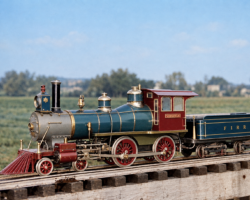
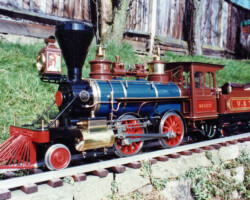
Virginia in 1976
Jack’s American locomotive Virginia was already complete by February 1960, when it can be seen displayed on a shelf at his home in Bideford.
In December 1976 Jack photographed the engine on its own, noting that the photograph was taken to illustrate or catalogue it for Norman Spink of Chesterfield. Spink was a well-known supplier to model engineers, providing drawings and castings for a wide range of miniature steam locomotives.
Jack also associated this photograph or its purpose with his great American hero, Buffalo Bill. Exactly what that connection was is not yet clear. It may have related to the American prototype represented by Virginia, or to material being prepared for Spink, rather than to Spink personally.
For many years Virginia stood on the sideboard in Jack’s sitting room at Egham, where it remained one of the engines most familiar to the family.
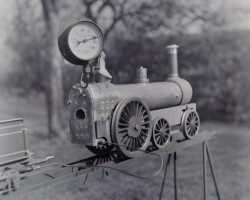
Stephenson Long Boiler
Stephenson Long Boiler - taken to illustrate article in the 'Model Engineer' 20 - 30 August 1976. No. 3543
Boiler test pressure 9 March 1976
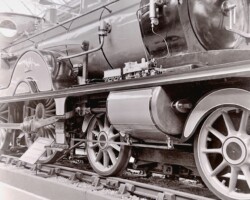
Adams T3 Clapham Museum 1965
Jack's 3 1/2" gauge 'Adams' on the running board of No. 653 in the museum at Clapham. August 1965