Jack photographed all sorts of things that happened to catch his eye. Some were unusual, some amusing, and others probably meant rather more to him than they do to us today.
Among his negatives are old pub signs, curious pieces of machinery, buildings, vehicles and assorted objects that apparently struck him as worthy of a photograph. At the time there may have seemed little historical importance in recording them. Decades later, however, many of the places and objects have disappeared altogether.
This gallery brings together some of those photographic odds and ends — a small record of the things that interested, intrigued or simply amused Jack as he went about his life.
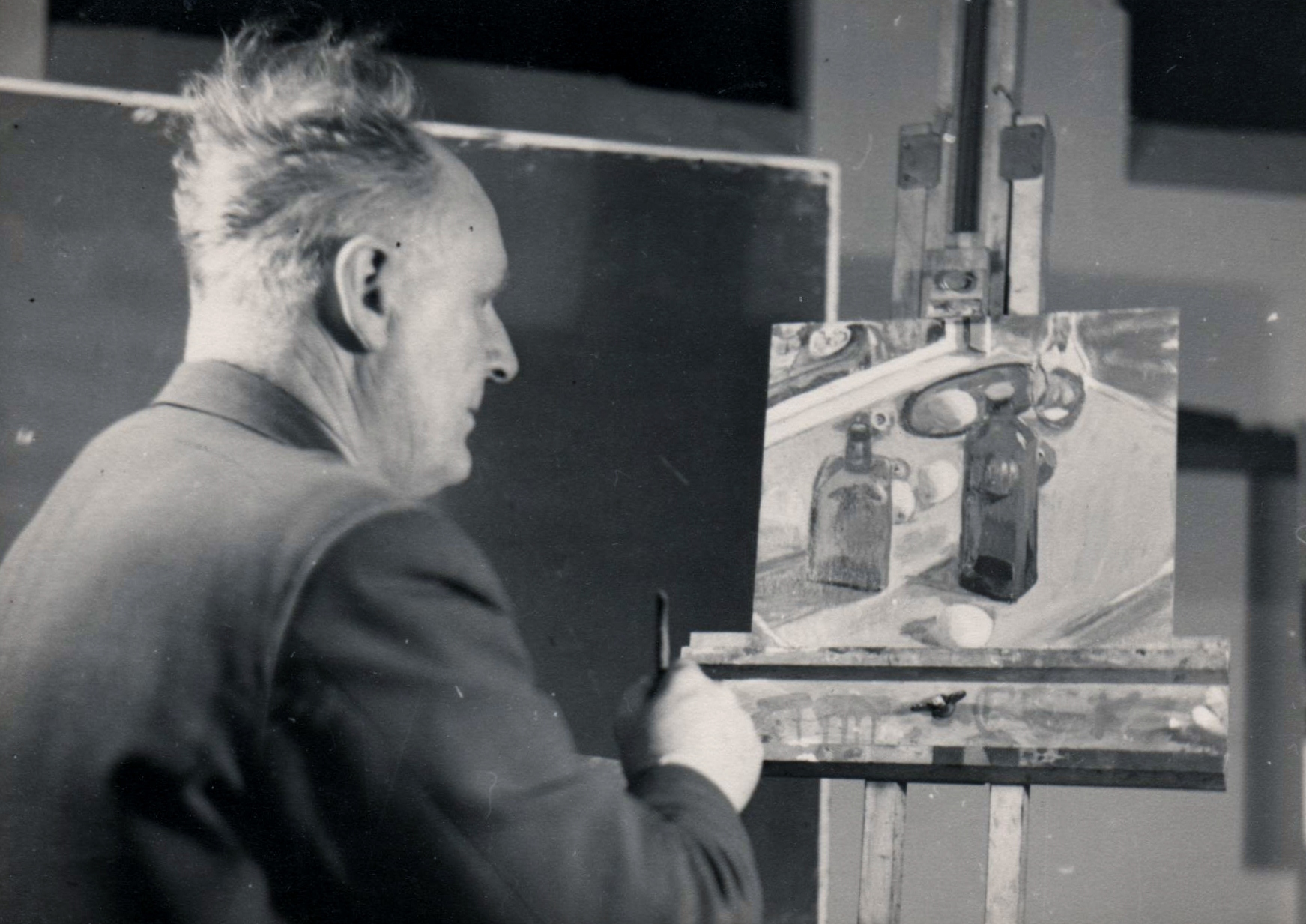
The Artist
Jack playfully toying with the idea that could also be an artist.
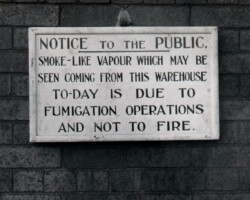
A Warning to the Public
Something about this notice clearly amused Jack — and it is not difficult to see why. Someone had gone to the trouble of making a proper sign to warn passers-by not to mistake what they were seeing for a fire.
Presumably the warning existed for a reason. Perhaps enough concerned members of the public had reported smoke or steam from the site that the owners eventually decided a permanent notice was the simplest solution.
Whatever the story behind it, Jack evidently thought the sign itself was worth preserving.
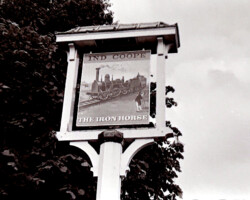
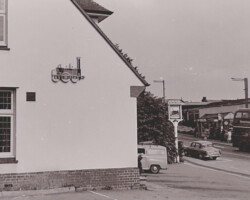
The “Iron Horse” Pub Sign, Amersham — 1966
The “Iron Horse” Pub Sign, Amersham — 1966
The “Iron Horse” Public House, Amersham — 1966
Photographed by Jack Davies in 1966. His original negative envelope identifies the subject simply as: “The ‘Iron Horse’ Public House sign. Amersham. 1966.”
Jack’s own small van can be seen parked beside the pub, giving the photograph an extra personal detail. What was probably just an amusing or interesting pub sign to him at the time has now become a useful little record of a place and moment that might otherwise have disappeared.
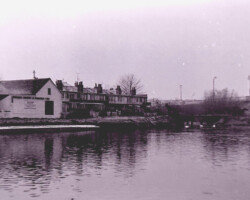
The River Thames 1963
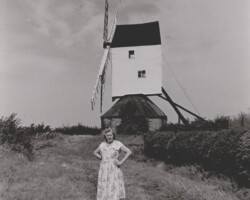
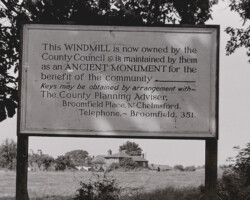
Old Windmill | 21st August 1963 | Chelmsford Road
An old windmill on the Chelmsford Road taken 21st August 1963 | with sister Lennie
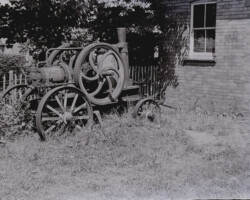
Old Petters Engine at Pooley Green
An old Petters Engine at Pooley Green - taken 2 August 1963
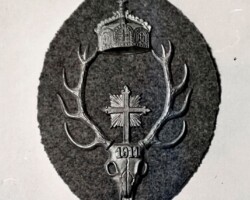
German Arm Badge — First World War
Among Jack’s negatives is this photograph of a German arm badge with a particularly interesting family history.
Jack’s original negative envelope reads:
“A German's arm badge, Jagers.? Taken from a German P.O.W. by C.S.M. Johnstone 1914-18 war.
Believed to be the German Army's champion shot for 1911. Now in the Imperial War Museum, London. Given by me A.S.J. 1960.”
The C.S.M. Johnstone referred to was Company Sergeant Major Company Sergeant Major Leonard Campbell Johnstone.
According to Jack’s note, Leonard took the badge from a German prisoner of war during the First World War. It was believed to have belonged to the German Army’s champion shot of 1911.
Jack later donated the badge to the Imperial War Museum in 1960, signing the note with his original initials, A.S.J. — Alfred Sinclair Johnstone.
The badge itself left the family collection, but Jack’s photograph and envelope preserve both its appearance and its provenance.
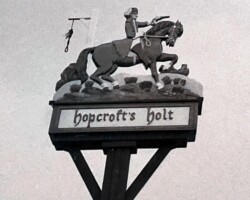
Hopcroft's Holt Inn Sign 1965
Jack photographed this wonderfully theatrical inn sign at Hopcroft’s Holt on the Oxford road from Banbury.
The inn had a long history as a coaching stop and was associated with the 17th-century highwayman Claude Duval. In 1754 the landlord and his wife were murdered there, adding another dark chapter to its history.
The hangman’s noose hanging from the sign seems entirely in keeping with the inn’s old coaching-road and highwayman associations — and was probably exactly the sort of detail that caught Jack’s eye.
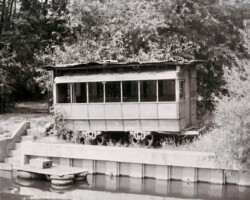
Horse-drawn Tram July 1961
An old horse-drawn tram, used as a bathing hut beside the River Mole - photo by Jack Davies taken 9th July 1961
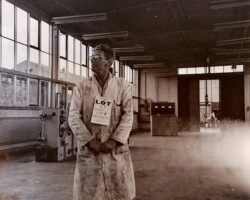
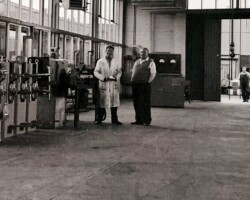
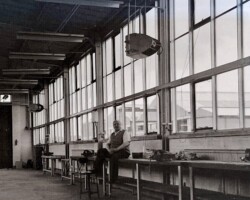
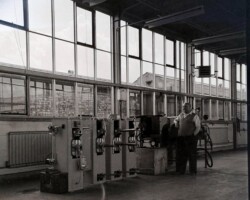
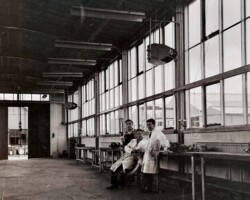
British Federal Welders — “Closing Down Scenes”, July 1965
British Federal Welder & Machine Co. itself did not cease trading in 1965, so Jack’s wording appears to refer to the closure or clearance of a particular part of the operation.
One photograph shows a man wearing a sale label marked “LOT 29 – SOLD 100”, indicating that machinery or equipment was being disposed of by auction or clearance sale.
Jack himself appears in the photographs standing with the men at the works, so this was clearly more than a casual visit. These were people he knew. Given the amount of model engineering Jack was doing by this period, it is quite possible that British Federal had also been a useful source of materials, components or engineering odds and ends over the years.
British Federal Welders 1965 - SOLD
One of the men at the British Federal Welder clearance, apparently joining in the sale himself. The label around his neck reads “LOT 29 – SOLD 100” — a rather dry piece of workshop humour at an otherwise unhappy occasion.
Jack stands with a British Federal Welder
Jack Davies standing with one of the British Federal Welder men during the July 1965 clearance. The same man appears in another photograph wearing the tongue-in-cheek “LOT 29 – SOLD 100” sign.
Jack sitting on a bench at British Federal Welders 1965
Jack photographed on his own with machinery or equipment during the clearance.
Machinery at British Federal Welders 1965 Sale
Another photograph of Jack on his own among the equipment being cleared or sold.
BFW Group Photo
The men that worked at the British Federal Welders in 1965